Read this first
Retatrutide is not approved in any country. You cannot get it from a pharmacy. It is still in its final round of testing, and the earliest anyone expects a decision is 2027.
What it is
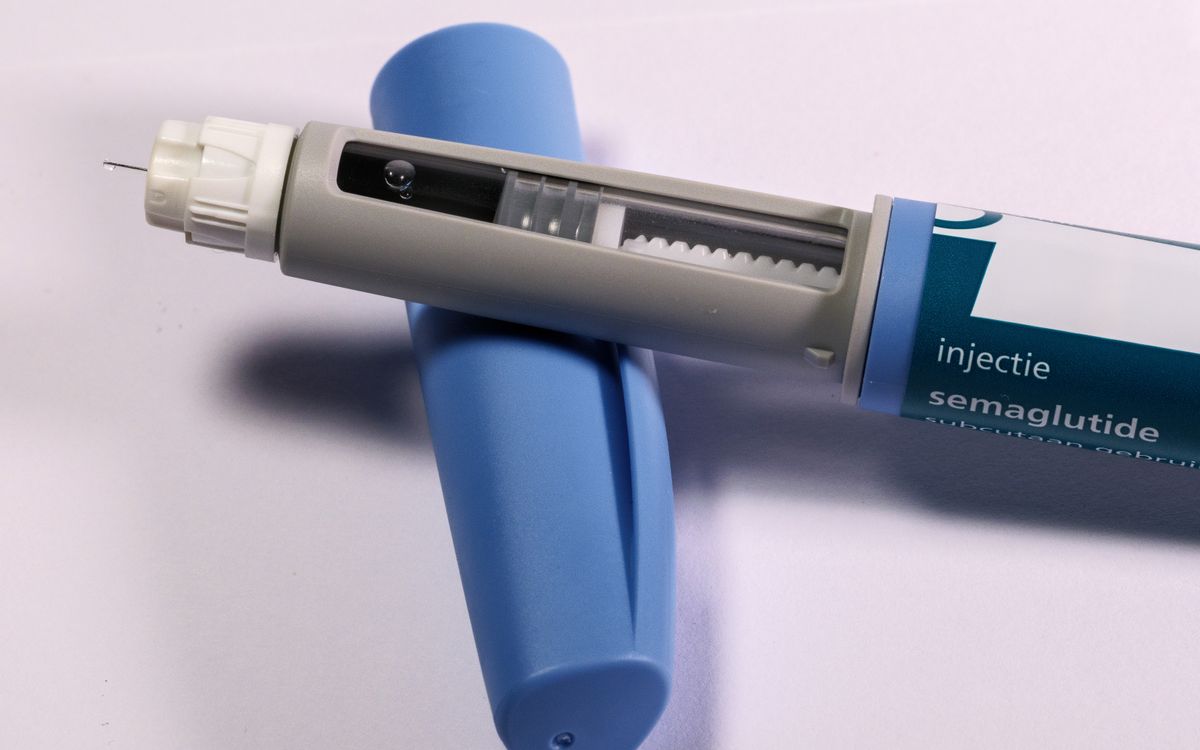
Eli Lilly makes it. It is a weekly shot. It lingers about six days in the body, which is why weekly works.
What sets it apart is how many switches it flips. Every drug here copies gut hormones. The difference is how many at once.
| Drug | Receptors | Average loss | Status |
|---|---|---|---|
| Semaglutide | 1 — GLP-1 | ~15% | Approved |
| Tirzepatide | 2 — GLP-1, GIP | ~21% | Approved |
| Retatrutide | 3 — GLP-1, GIP, glucagon | 24.2% | Still testing |
What the three switches do
GLP-1 is the one semaglutide uses. It tells your brain you are full and slows your stomach down.
GIP is the second one, the one tirzepatide adds. It helps you handle a meal. Blood sugar stays steadier, and more of what you eat is directed into cells instead of drifting about in the blood.
Glucagon is the new one, and it works the other way round. It tells your liver to burn stored fat for fuel, and it raises how many calories you burn just sitting still.
The first two make you eat less. The third makes you burn more. That is the whole idea.
Why it feels weaker than semaglutide
This surprises people, and it is worth understanding before you judge whether it is working.
You cannot max out three receptors in one molecule. Something has to give. So retatrutide was built strong on GIP and deliberately weaker on GLP-1 — roughly 40% as strong as semaglutide there.
GLP-1 is the one you actually feel. So hunger comes back more on retatrutide than people expect, and they assume it is not working.
But the glucagon effect is invisible. Your liver burning fat is not a sensation. Judging this drug by how hungry you feel measures one of its three mechanisms and ignores the one that makes it different.
What the trials showed
The Phase 2 trial followed 338 adults for 48 weeks. Published in the New England Journal of Medicine.
| Weekly dose | Average weight loss |
|---|---|
| 1 mg | 8.7% |
| 4 mg | 17.1% |
| 8 mg | 22.8% |
| 12 mg | 24.2% |
| Fake shot | 2.1% |
Two things stand out. Going from 4 mg to 8 mg bought about 6 more points. Going from 8 mg to 12 mg bought about 1.4. And weight was still dropping when the trial ended, so nobody knows where it stops.
On the Phase 3 numbers
The source we worked from cites Phase 3 results of 28.7% at 68 weeks, roughly 71 pounds, plus large knee pain improvements. We have not been able to verify those against a published paper. They come from a company announcement.
Company announcements are usually accurate and usually flattering. Until the paper is out, the 24.2% Phase 2 figure is the one with peer-reviewed data behind it, and it is the number used elsewhere on this site.
The liver result
This is the finding that gets least attention and may matter most.
In a sub-study of people with fatty liver, liver fat fell 82.4% at the top dose in 24 weeks. Most of them, 86%, got back to a normal level. On the fake shot, not one person did.
Fatty liver is a big driver of long-term damage. A fall that size is the largest on record for any drug.
Side effects, including an odd one
The usual ones for this class, and worse at higher doses: feeling sick, vomiting, diarrhoea, constipation.
The one people do not expect: skin sensitivity
Some people get dysesthesia. Ordinary touch starts to feel wrong. There is tingling, and heat and pressure feel sharper. You can feel your clothes on your skin. It is usually worse at night.
It gets more common at higher doses, and it is fairly specific to this drug. Researchers think nerve receptors are involved. Feeling cold is also common.
One case of pancreatitis was reported in Phase 2 and resolved by itself. No thyroid cancers and no severe low blood sugar were reported.
Who should not take it
- Anyone with medullary thyroid cancer, personally or in the family
- Anyone with MEN 2
- Anyone pregnant, breastfeeding, or trying
Care needed with a history of pancreatitis, gallbladder disease, type 1 diabetes, diabetic eye disease, heart rhythm problems, slow stomach emptying, or an eating disorder.
The interaction that matters most
Insulin or sulfonylureas. Combined with this, blood sugar can drop dangerously low. Doses of those usually need changing, and that is a doctor's job.
It also slows the stomach, which changes how other tablets are absorbed — including the contraceptive pill. And with SGLT2 inhibitors there is a raised risk of ketoacidosis.
Doses used in the trials
The trials tested 1, 2, 4, 8, 9 and 12 mg weekly, building up in steps.
| Weeks | Weekly dose |
|---|---|
| 1–4 | 2 mg |
| 5–8 | 4 mg |
| 9–12 | 8 mg |
| 13 onward | 12 mg |
The trial found something useful here: a 2 mg start caused far fewer side effects than a 4 mg start, and ended up at much the same weight loss by week 48. Rushing the build-up bought nothing at all.
Given how small the 8 mg to 12 mg gain was, the top dose is not automatically the right target.
What people combine it with
The common pairing is cagrilintide, added to make up for the weaker hunger control. It works through amylin, a different system — the brain stem rather than the hypothalamus — so it adds a pathway instead of doubling one up.
This has not been tested in a trial. The reasoning is mechanical, not evidenced.
What not to combine
Do not add semaglutide or tirzepatide. Retatrutide already works the GLP-1 receptor. Stacking another GLP-1 drug on top piles side effects on the same pathway without a matching gain.
What users report
From forums and user logs, not from trials. Treat it as gossip with a pattern, not evidence.
- Hunger control weaker than semaglutide — this matches the trial pharmacology
- Food indifference to the point of forgetting to eat, and struggling to hit protein
- Resting heart rate up by roughly 10 beats per minute
- Feeling cold, and the skin sensitivity above
- Many report good results at 8 mg without going to 12 mg
Muscle
A body composition sub-study found the share of weight lost as muscle was similar to other drugs in this class — meaning the extra weight lost is not coming disproportionately from muscle.
That is a comparison, not a guarantee. Protein and resistance training are what protect muscle on any of these drugs.
Where people get it
Since it is approved nowhere, there is no pharmacy route. It circulates as a research chemical, which means nobody has checked that a given vial contains what the label says. One supplier is Nalu Labs. We link it because we were asked to, not because we tested it, and a link is not a recommendation to take anything. What "research chemical" really means.
Where this came from
- Jastreboff AM and others. Triple-hormone-receptor agonist retatrutide for obesity: a phase 2 trial. New England Journal of Medicine, 2023.
- Rosenstock J and others. Retatrutide for people with type 2 diabetes: a phase 2 trial. The Lancet, 2023.
- Sanyal AJ and others. Retatrutide for metabolic dysfunction-associated steatotic liver disease. Nature Medicine, 2024.
- Coskun T and others. Effects of retatrutide on body composition. The Lancet Diabetes and Endocrinology, 2025.
- Li W and others. Structural insights into the triple agonism of retatrutide. Cell Discovery, 2024.
- Eli Lilly, Phase 3 TRIUMPH-4 announcement. Company statement, not a peer-reviewed paper.
What we left out, and why
The source included the writer's own experience of taking it, and a video link. Both are gone — this runs under a staff byline, one person's story is not evidence, and we do not carry promotions.
We also did not repeat the Phase 3 percentages, the manufacturing investment figure, or the regulatory strategy claim as established fact, because we could not verify them against a published source.
Think we got something wrong? Here is how we fix mistakes.