Before the steps
This page explains what the process is. It is not a recommendation to take anything. Several compounds this applies to are not approved for people in any country.
Why it arrives as powder
The vial has been freeze-dried. The proper word is lyophilised. The water is pulled out while the peptide structure is left intact.
Dry, it survives shipping and sits stable for a long time. The moment you add water back, that changes. It becomes fragile, it needs a fridge, and it has a limited life.
Which is why you mix a vial when you are ready to start using it, not weeks ahead. There is nothing to gain by doing it early and something to lose.
What the process uses
- Bacteriostatic water
- Sterile water that has a little benzyl alcohol added. That alcohol holds bacteria back, so a mixed vial keeps longer than it would in plain sterile water.
- Insulin syringes
- 1mL. Fine markings, so small amounts can be measured properly.
- Alcohol prep pads
- For wiping the rubber stoppers and the surface.
- A clean surface
- Wiped down, well lit, with room to lay everything out.
One thing the guides usually skip
The benzyl alcohol in bacteriostatic water is not harmless. It must never be used for newborn babies, and some people react badly to it. If you have reacted to a preserved injection before, that is worth raising with a doctor rather than shrugging off.
Keeping it clean
Contamination is the risk that matters here. The habits are simple.
- Wash your hands properly, then use gel on top of that.
- Wipe the surface down before anything comes out of its packet.
- Lay everything out first. Fumbling mid-way is how things get touched.
- Never touch a needle tip, the inside of a cap, or a rubber stopper with your fingers.
The process, step by step
- Set up. Clean surface, clean hands, everything within reach. Pull the plastic caps off both vials so the rubber tops underneath are showing.
- Wipe both stoppers with an alcohol pad. Let them dry completely. Going through a wet stopper drags alcohol into the vial.
- Draw the water. Push the needle through the stopper on the bacteriostatic water vial and pull back the amount you want. Usually 1mL to 2mL, depending on how strong you want the result.
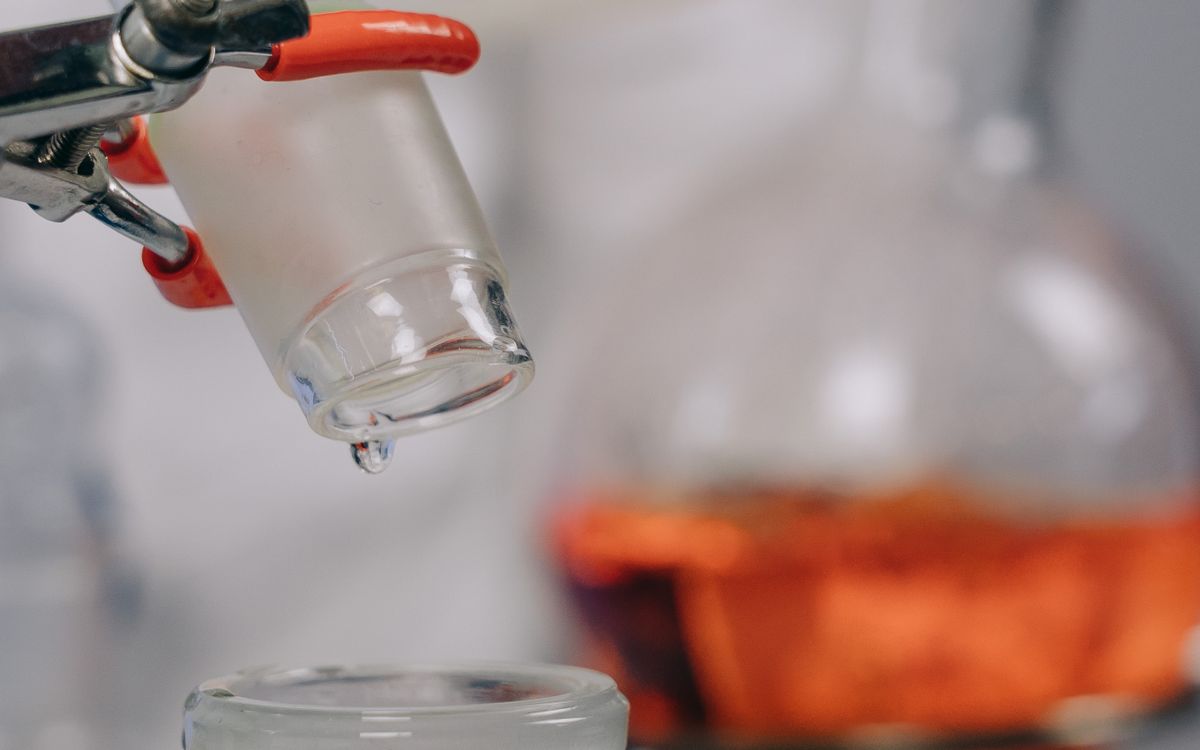
- Add it to the powder — and this is the step people get wrong. Point the needle at the side of the glass and let the water trickle down it.
- Let it sit. Give it a few minutes to dissolve on its own. A gentle swirl is fine. Shaking is not.
- Check it. The liquid should be clear with nothing floating in it. Some peptides carry a faint colour, which is normal.
Never squirt water straight onto the powder
A jet of water landing straight on the powder can wreck the peptide. Point at the side of the glass instead and let it trickle down. This is the single most repeated warning in every guide on the subject, and it is repeated for good reason.
Working out the strength
How much water you add decides how strong the result is.
Amount of peptide ÷ water added = concentration
A 5mg vial with 2mL of water gives 2.5 mg/mL, which is 2500 mcg/mL.
Write it on the vial. Future you will not remember how much water went in, and guessing at that number is how dosing errors start. The dosing maths is here.
Five things that ruin a vial
| Do not | Why |
|---|---|
| Shake it hard | Rough agitation can break the peptide apart. Swirl gently or just wait. |
| Use tap water | Or anything else that is not sterile. Only bacteriostatic water, or sterile water made for injection. |
| Freeze it once mixed | Unless that specific peptide says otherwise. Ice crystals damage it and it may not come back. |
| Use expired water | The preservative stops working, so bacteria are no longer held back. |
| Mix two peptides in one vial | You lose any control over the individual amounts, and nobody knows how they interact. |
Think we got something wrong? Here is how we fix mistakes.